Monday, March 21, 2016

"The flame that burns twice as bright burns half as long."

So cognitive enhancement is a thing.  There is literally a common drug in pill form that works akin to the fictitious NZT-48 from Limitless, at least for me.  I get it from my local pharmacy in 10mg and 5mg pills.  By the hundreds.  For cheap.  Covered by insurance.  It's called hydrocortisone, and (for me) it serves a medically necessary purpose by providing the cortisol my body no longer produces in sufficient quantities.  Like its fictitious counterpart, it comes with serious, long-term health consequences.  One unintended side effect is significant cognitive enhancement.

Describing cognitive enhancement to anyone who hasn't experienced it presents the challenge of describing a subjective experience to which not everyone can relate:

Like illustrating the difference between two shades of green only discernible to tetrachromats.
Like trying to get an energetic toddler to understand chronic fatigue.
Like describing depression to one who thinks of it as synonymous with sadness. 

I'll go with simple and (hopefully) relatable metaphors: speed and strength.

Hydrocortisone (in sufficient quantity) makes me mentally faster and stronger.  If my daily tasks are stones, with the help of HC I can throw ten in the time it took me to throw one.  Or, I can throw one with only a tenth of the effort.  That's cool, but so what if I can throw stones faster and easier?  The tasks get done either way, right?  Wrong.

Some mental tasks are time dependent.  They only get accomplished successfully if one can complete them within a certain amount of time.  For example, noticing heavy traffic on the highway ahead, with ~20 seconds to decide whether to take the nearby off-ramp and a completely different route.  On HC, it is easy for me to make this decision, because I can quickly plan a new candidate route and estimate the time time it would take, even without total familiarity of the roads involved.  Another time-dependent task is wit.  Being witty is something that usually has to be done within a relatively short time, or the moment is gone.  Without HC, the act of thinking resembles wading through water, instead of walking (or running) on dry land.

Mental "strength" factors in because some difficult tasks cannot be subdivided and tackled piecemeal.  These are like boulders.  Either I am strong enough to handle them, or I'm not.  Just as no amount of time or willpower would let me lift a large boulder, no amount of determination would help me tackle difficult problems and concepts.  So it goes with cognitive enhancement via HC.  In Dungeons & Dragons speak: +5 INT per 5mg pill.

So, what's the point of tossing stones and hurling boulders?  Fighting giants, of course.  Let me go ahead and preempt the obvious David and Goliath remark -- this isn't a perfect metaphor.  It just serves to illustrate my point.  

Yes, taking hydrocortisone will likely cause me significant health problems, but there's not much I can do about that, given that adrenal insufficiency puts me in the hospital.  Of course I'll do what I can to wean off it as much as possible, but while the hydrocortisone high is there, I'll be riding it with a smile.  If I lose the cognitive benefits as I wean off, then maybe I'll have some interesting decisions to make.  Such as:

Is it better to burn out, or fade away?


Saturday, August 8, 2015

Skin problem? Vinegar solution!

For the past few weeks, I've used Doxycycline, Clindamycin, and Bactroban (mupirocin) ointment to treat a mild (but persistent) skin infection on my big toe. Combined with daily saline (salt water) soaks, the infection didn't worsen, but also didn't go away. The use of antibiotics seemed to produce mostly just unpleasant side effects (skin rash and typical GI symptoms).  The ointment seemed partially effective, but my doctor advised I discontinue it, given the lack of clear results after 6 days of use.

Yesterday, my (Duke Medical Center) dermatologist suggested trying a vinegar or mild bleach solution.  She mentioned that vinegar is effective for treating both fungal and gram-negative bacterial infections, and provided me instructions for mixing and applying the solution.  Immediately following the soak, I noticed some stinging and inflammation.  Since then (overnight), the affected area has improved significantly. Thus, I feel compelled to share her instructions for this easy, affordable, and potentially effective home remedy:

Antibacterial & Antifungal Vinegar Soak
  • 1:2 vinegar to water solution (1 part vinegar to 2 parts water).
  • Use regular, store-bought white distilled vinegar.
  • Use tepid water -- no extreme temperatures.
  • Soak the affected region for 15 minutes, once daily.
  • Dry the area completely and allow it to remain open to the air as much as possible.
That's it!  I hope this proves informative and useful for someone.  Don't hesitate to leave a quick comment here letting me know, if it does.


Saturday, July 17, 2010

How to fix your dead Samsung netbook

If you own a Samsung netbook with a wonky DC power connection, or one that just plain won't charge or power on, here's how you might be able to fix it for about $20, like I did for my friend's Samsung NC20. Warning: opening up your netbook might void your warranty. However, it might also save you time, money, and a lot of hassle. For example, I sent my friend's NC20 in for warranty service, and Samsung failed to fix the problem. When the problem recurred only a week after they returned it (supposedly fixed), they refused to repair it--the netbook's warranty had just expired. Meh.


  1. Test your AC power adapter.

  2. Do this first, because you'll kick yourself if you take apart your netbook for no reason. This helps confirm whether the problem is with your netbook or the power supply. Plug it in and use a multimeter (if you have one) to confirm that that the DC output (the cylindrical jack which connects to the notebook) of your AC adapter is putting out its rated voltage (about 19V for the Samsung NC20). If it doesn't, then consider ordering a replacement from http://www.samsungparts.com before proceeding further.

  3. Take off the bottom cover.

  4. Flip the netbook upside down, and remove all of the screws (except for the screws to the memory access panel). Keep track of which screw went where. Use a flathead screwdriver to pop off the bottom cover. Avoid applying too much force, so as to prevent scratching or denting the plastic chassis.

  5. Test the DC jack and harness.

  6. Here's what the area around the DC jack and harness looks like, on the Samsung NC20:


    Here's DC jack and wiring harness look like, when removed from the netbook:


    Here's a closeup of the connector which attaches to the netbook's motherboard:


    The simplest way to test the DC jack and harness is to plug it in, then use a multimeter to test the voltage at the connector which attaches to the motherboard (shown above). The connector terminals (copper colored, in the picture above) are relatively easy to use for testing, despite being small. For the Samsung NC20, you should see about 19V between the black wires and the red wires. Test both black wires against both reds. If you get a positive voltage for each pairing, and the voltage remains steady when you wiggle the DC connector or wire harness, then your DC jack and harness are probably fine. In this case, the problem likely with something else in your system, and is beyond the scope of this tutorial.

    If you don't see voltage across one or more of the black/red wire pairings, or the voltage is intermittent when the DC connector is wiggled, then there's a problem with your DC jack or harness. To order a replacement, go to http://www.samsungparts.com, look up your netbook, and click the "Entire Parts" button to show all parts for the system. Look for a part named "BRIGHTON,WIRE HARNESS CBF HARNESS-DC_JACK", or something similar. For my friend's Samsung NC20 (model number NPNC20KA02US), the correct part number is BA39-00789A, and it costs $11.75. Shipping, handling, and tax brought it to almost twice that, and it was delivered within a day or two.

  7. Alternative: fix the harness yourself.

  8. Rather than (or in addition to) ordering a replacement DC jack and wire harness, you could opt to repair the existing harness. It helps if you have some stranded 26 AWG (or similar gauge) wire available, but you might be able to simply resolder the existing wires onto the DC jack, if you're careful. Find the broken connection (probably at one of the soldered joints on the DC jack) and repair it. Here was how mine looked after my repair, but before I wrapped it in heat-shrink tubing:


If you found this tutorial helpful, please post a comment saying so! I'd love to hear if anyone found it useful. I suspect that many other Samsung netbook owners may encounter this issue, due to the design and positioning of the DC jack.

Sunday, November 15, 2009

Risking the intellectual integrity of my blog...

Here are a few early pictures of Izzy, one of our foster kittens from about a year ago:


Late one night, Anna found her in the bathroom, anemic and too weak to walk. We took her to the emergency vet at 3:30am. When she tested positive for feline leukemia virus (FeLV), we were faced with the difficult decision to euthanize her. She was such a happy kitten, but FeLV is often a (painfully) terminal illness. It is not uncommon for rescue/adoption organizations to euthanize FeLV-positive kittens when they show signs of trouble. This is for the kitten's own well being, but also due to resource limitations. The resources needed to care for and quarantine dying kittens could be used to rescue otherwise healthy kittens. Such is the difficult reality of regions with significant feral cat overpopulation.


Since Izzy did not seem to be in pain, we opted to give her every chance, and tried to help her how we could. Over the next several days, we nursed her back to health with nutritional supplements and TLC. She bounced back, found a great home, and eventually tested negative for FeLV (indicating that her body fought off the infection before it became chronic). She's been doing great for almost a year, her owners sent us these photos yesterday:

Wednesday, November 11, 2009

Virgin America nitpicks

Nonfunctional Gogo Inflight Wifi: -10
The holy grail of passenger perks, ended up being a holy carrot on a stick. Worse than nonfunctional, the HTTP redirector simply takes you to 127.0.0.1 while advertising that "you are now connected to the Internet." I've never had it work for me on a single flight. Technically, they do offer wifi, but it only connects you to yourself. FAIL!

Chris Cornell soundtrack: -1
Virgin's techno-savvy demographic overlaps significantly with Twitter's. One of Twitters coolest celebrity (ex-)users had some infamously choice words to describe Cornell's latest offering. Does anyone disagree with that review, or not think of it when hearing the album?

No Web Check-in For Hotel Kiosk Users: -5
My hotel guest computer system was so thoroughly locked down, the Virgin America web site check-in process simply wouldn't work. The web site mostly worked and I could even log in and print my itinerary. But apparently, no Javascript + no Flash = no check-in or pre-printed boarding passes for you! Grosvenor Suites shares half the blame for this, though. IE 5.5 on a 486 with everything locked, does that even count as Internet access?

In-flight "Entertainment": +/- 0
It's like Skynet's retarded cousin. So much potential, utterly wasted and occasionally embarrassing.
Movies on demand: decent selection, overpriced as hell. Par for course.
Chat & TV Chat: very cool, but nobody uses it. /sadpanda
Games: Doom was pretty neat 15 years ago. It's forgivable if it's just there for geek cred, but it looks like the feature offering.
TV: I got to watch WSOP, good enough.
"Best of the Web": More like the best of the web from 6+ months ago. Web content rots quickly.

Pre-boarding Trivia Contest T-shirt giveaway: +5
Kudos for trying.

Airfare: +100
San Diego to San Francisco (and back!) for $120. Ninety minutes, each way. You're doing something right, at least...keep it up!

Tuesday, October 6, 2009

Absent mindedness

I just forgot what I was about to do. I just needed to do one thing before I did it, and that small act derailed me.

I tried retracing my steps. I almost remember, but not quite. I start getting that "ah ha!" feeling, but then the feeling itself distracts me and I don't capture the memory. Just a glimpse, as it slinks back into my subconscious.

The feeling of almost having remembered, having it on the tip of your tongue, is not so bad. Trying hard to remember and not having a clue, that's frustrating. Like fishing all day with no bites. At least you know you've got a decent chance, when you're getting nibbles. The longer it takes, the bigger the "ah ha!" moment will be, but it'll probably come. Sometimes it will even happen multiple times, before finally getting there. (I wonder if that's how it is for girls...)

When I come close to remembering, I'm usually fine with just waiting for it to click. Unless there's an imminent deadline, I can go about my business--it will usually come back to me at some point. Similar to déjà vu, it's not usually something one can consciously achieve. Trying harder is usually counterproductive.

I remember that I needed to go into my bedroom to do this thing, and it was something I'd been intending to do for a little while. Not napping, not cleaning.

Time to stroll back to the scene of the thought. It's a little risky, as the conscious effort of remembrance might only throw me further off track. Sometimes the familiar sights will lure it out again, and it's too tempting not to try.

Nope.

Now I'm totally off track. The only thing to do now is give up and wait.

Conjecture About Lyme Susceptibility

It's a fact, mosquitoes are more attracted to certain people. I always wondered why I was the only one complaining about mosquitoes whenever I went camping, and why they would still bite even when I was wearing repellent.

Hypothesis: what if the same holds true for other biting insects, such as ticks? What if so-called "mosquito magnets" are also tick magnets?

I wonder if this merits experimentation. If true, it would make sense for "mosquito magnets" to be even more vigilant about preventing tick exposure and bites. I was an active Boy Scout for many years, yet I never heard of anyone else in my troop getting Lyme disease. Hmm...

Sunday, August 9, 2009

DIY GPS Vehicle Tracking for $100 + $40/year

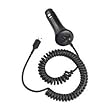
1) Motorola Mini-USB Car Charger ($9.61 w/ shipping)


2) Mini-USB Lightning Harness Adapter ($39.99 w/ shipping)


3) Motorola i290 ($49.99 before tax and/or shipping)


4) Instamapper.com + Tracking Application (free)


Boost Mobile's $.35/day unlimited data plan (via the "wireless web" activation option) is unnecessary. One only needs to add $10 (the minimum) to the phone's balance every 90 days, to keep it activated. The balance never gets used (unless you use the phone for calls), it just expires after 90 days.

Other Boost Mobile phones, such as the i335 or i425, should work fine. Check the Instamapper.com discussion forums to read about others' experiences. I've only tried the i425, but it's no longer available. The i290 is currently the cheapest available option. For iDEN phones without a mini-USB port, one may need to replace the "Lightning Harness Adapter" above with the Falcon Wiring Harness. This might be even cheaper, but may require a bit more work to install. (FYI, the adapter is what turns on the phone when the car is started).

I've been using a similar setup for about 8 months, it's awesome!

Tuesday, July 14, 2009

Laptop AC power cable routing mod


While using my laptop, I'm usually on the couch, and it's usually plugged into AC power. The power connector gets tugged occasionally, whenever I move the laptop. Invariably, a few months of this loosens the plug or causes the cord to start coming apart, leading to mechanical failure. Not being one to simply accept a problematic design, I fixed it quite satisfactorily with a few self-adhesive wire clips from my local hardware store, as shown above. If the adhesive isn't strong enough, I can just replace it with epoxy. So far, it's worked great.

Friday, June 19, 2009

Why 802.11b/g wifi channel 1 is the best

I recently spent a few minutes figuring out why my microwave was causing my wifi connection to drop. I was able to resolve the problem entirely by switching my wifi router from channel 11 to channel 1. Here's why I think channel 1 is the best channel for 802.11b/g:
  1. Standard 802.11b/g hardware can make use of up to fourteen 802.11b/g wifi channels in the 2.4Ghz ISM band.

  2. Each channel is essentially up to 22Mhz "wide", thus, at most three channels may be used in a particular location without significant "overlap" (such as channels 1, 6, and 11).

  3. Simultaneous activity on overlapping channels can cause interference, resulting in overall performance degradation (slower speeds, lost connections).

  4. Most 2.4Ghz wifi equipment is factory set to use channel 6, making it one of the most frequently used 802.11b/g channels.

  5. Microwaves are well known for interfering with wifi. They operate at 2450Mhz, which corresponds approximately to channel 9. Microwaves can cause measurably significant interference on channels 7 through 13, though channels 8 through 11 are affected the most.

  6. Lower EM frequencies have longer wavelengths, and thus longer range at the same signal power. Admittedly, the difference between channel 1 and channel 14 is only 72Mhz, which is fairly trivial difference at 2.4Ghz. I suppose it's also arguable that lower frequencies have lower bandwidth capacity?

Note: I'm only using 802.11g because I prefer the Flexview display in my older R51 Thinkpad, which only supports 802.11g wifi. I'd certainly be using 802.11n otherwise, which doesn't face the same interference problems, partially due to its ability to use multiple frequency bands.

Thursday, June 18, 2009

Tonight's abortion discussion on the Daily Show

Kudos to both Jon Stewart and Mike Huckabee for maintaining an interesting and fairly rational discourse on the topic of abortion. Very interesting, and suprisingly free of Stewart's usual overwhelming one-sidedness. I was disappointed they never got around to discussing the root of the debate, at least on air. (In a nutshell, I think it has to do with our society's arbitrary and ill-defined mandate about a person's right to life.) I'll have to check out the full version shortly.

Anna made a great point that she wishes Huckabee would have had to defend his clearly stated "every human life is equal" belief in the context of an LGBTQ discussion. Unsurprisingly, Huckabee is apparently quite "pro-family" (read "against equality, independent of sexual preference"). He seems like a nice and intelligent guy to me...I wonder if he genuinely believes his opinions, and why.

Thursday, March 26, 2009

A welcome robocall from Congresswoman Susan Davis

Last night I received a robocall from the office of San Diego's Congresswoman Susan Davis, inviting me to join a public townhall teleconference in progress. It told to just remain on the line to be automatically joined to the conference, or to press 2 to opt-out of any future calls. How great is that?

I stayed on the line and joined, to be treated to a few disappointing call-in questions (and Ms. Davis' responses) before my cordless phone lost reception from only 25 feet away (a 5.8 GHz Uniden with new batteries). Sadly, it's status quo for the phone, call reception seems rather unreliable in my urban abode.

The robocall recording had never given me a callback number (or option), and I don't pay for caller ID on my landline, so I had no way to call back into the teleconference. I could have tried *69, but I wondered what charges I would end up paying for that, if it would have even worked. I tried a quick Google search, but didn't find any information about the town hall teleconference on her official web site. I was getting ready to go out anyway, so I gave up. Ah well, it was cool while it lasted.

Kudos to Susan Davis for going to great lengths to interact with her constituents! Now, if only they could find a better way to filter out the paranoid wackos and senile old ladies.

Tuesday, March 3, 2009

A cylon-inspired tangent to abortion

If we ever design robots sophisticated enough to be called "alive", all the strict pro-lifers may have to accept they can never unplug any of their AI-compatible equipment without compromising their principles.

Stated another way, I think the abortion debate is upper-bounded by the development of human-like robots.

Speaking of robotic cohabitants, I wonder how we'll ever justify humanity's inefficient use of resources to them if we ever bump up against resource limits and are forced to start allocating resources based on productivity efficiency. Somehow I think the age-old parenting fallback of "because I said so" won't hold up to (hopefully ruthless) robotic logic.

Sunday, March 1, 2009

The abortion debate makes us dumber

While musing about the pro-choice vs. pro-life arguments of the abortion debate, I realized that the debate is a symptom of irrationality. This is easier to see by deconstructing the crux of the debate: that we (humans) have a right to life1.

What does this statement actually mean? Precise definitions of "humanity" and "life" would require exact physical or chemical descriptions, potentially down to a molecular level. We get by without them because we usually don't require them, but in the context of abortion, they are particularly necessary. Assuming that science eventually provides exact definitions, any laws governing abortion would undoubtedly rely on them. In doing do, such law would create a ludicrous set of boundary conditions--a fetus one mutation shy of being "human" or a nanosecond short of being "alive" would fall outside of the law. These ridiculous boundary conditions plainly show that the concept of sanctioning or criminalizing abortion is entirely arbitrary, because the definitions of "human" and "life" are arbitrary. As in not founded on reason. "Human" and "life" simply describe different states of matter that we are subjectively connected to.

This leads to two questions:
  1. Is it right to impose arbitrary laws?
  2. How should arbitrary laws be defined?

First, it's important to recognize the difference between arbitrary regulations and arbitrary laws. We encounter arbitrary regulations every day, while driving under posted speed limits, for example. However, one must recognize that laws like speed limits are arbitrary in a very different sense than abortion law. The motivation behind laws imposing speed limits is that nobody has the right to endanger others on public streets. It boils down to a "pro-life" ideology, that nobody has the right to endanger someone else's life2. Sure, the actual speed limits themselves are arbitrary, but the crux of the law is quite rational3: it is important to protect life. This assumption is well accepted in society and generally does not require an exact definition for life. However, abortion law is different, because it depends on precisely defining life.

Thus, the crux of the abortion debate centers on the question of how to define a law based on an arbitrary definition. Since the definition of life is arbitrary, any approach depending on it cannot be considered rational or scientific. "Arbitrary definition" is an oxymoron in the context of science, where definitions are simply precise measurements, not arbitrarily selected values4. Rationally creating a law based on an arbitrary definition is like attempting to find two integers which add up to "three-ish".

The matter ends up being settled by the laws the universe imposes on us all. Natural selection. Survival of the fittest. Might is right. Our arbitrary laws evolve to represent the social groups powerful enough to change them. I, for one, desperately want to live in a society based on reason and science. I hope that the Internet catalyzes this kind of social evolution, that perhaps it will become a possibility within my lifetime. I suppose that as long as we're generally heading toward that goal, that's all I can ask for.

In the meantime, I'm going to stop debating the subject. Humans do NOT have a right to life, it is simply a useful social tenet that doesn't usually require exact definitions for "human" and "life". The universe is decidedly unconcerned with whether any of us are alive, and with the myriad ways in which that may change.


Footnotes

1: Note: I'm not claiming that the crux is a general "right to life" for all life. The practice of killing and euthanizing animals (and aborting animal fetuses) is currently well accepted, indicating that a general "right to life" is not crucial to the debate. Also note that I'm not implying that I support killing animals, though I do enjoy a good hamburger, occasionally.

2: Perhaps the only "arbitrary" type of laws I can agree with are those that boil down to protecting people from the actions and choices of others. Our kind of society hinges on the concept that nobody has the right to endanger someone else's life (or create a significantly negative impact on someone else's life). Obviously, though, this ideology becomes difficult to apply in the case of abortion law, due to the ill-defined nature of life. At what point does a human gain the right to life? At conception? At the age the fetus can survive outside the womb? When it can feel pain or know that it is dying? At birth? At an age where it can fend for itself? It's quite a slippery slope, once one starts debating anything beyond conception...

3: Rational, given our subjective context of being alive.

4: Except when dealing with the definitions of units of measurement, of course!